Veiled bust leaves its €16,000 estimate behind to make €1.925 million
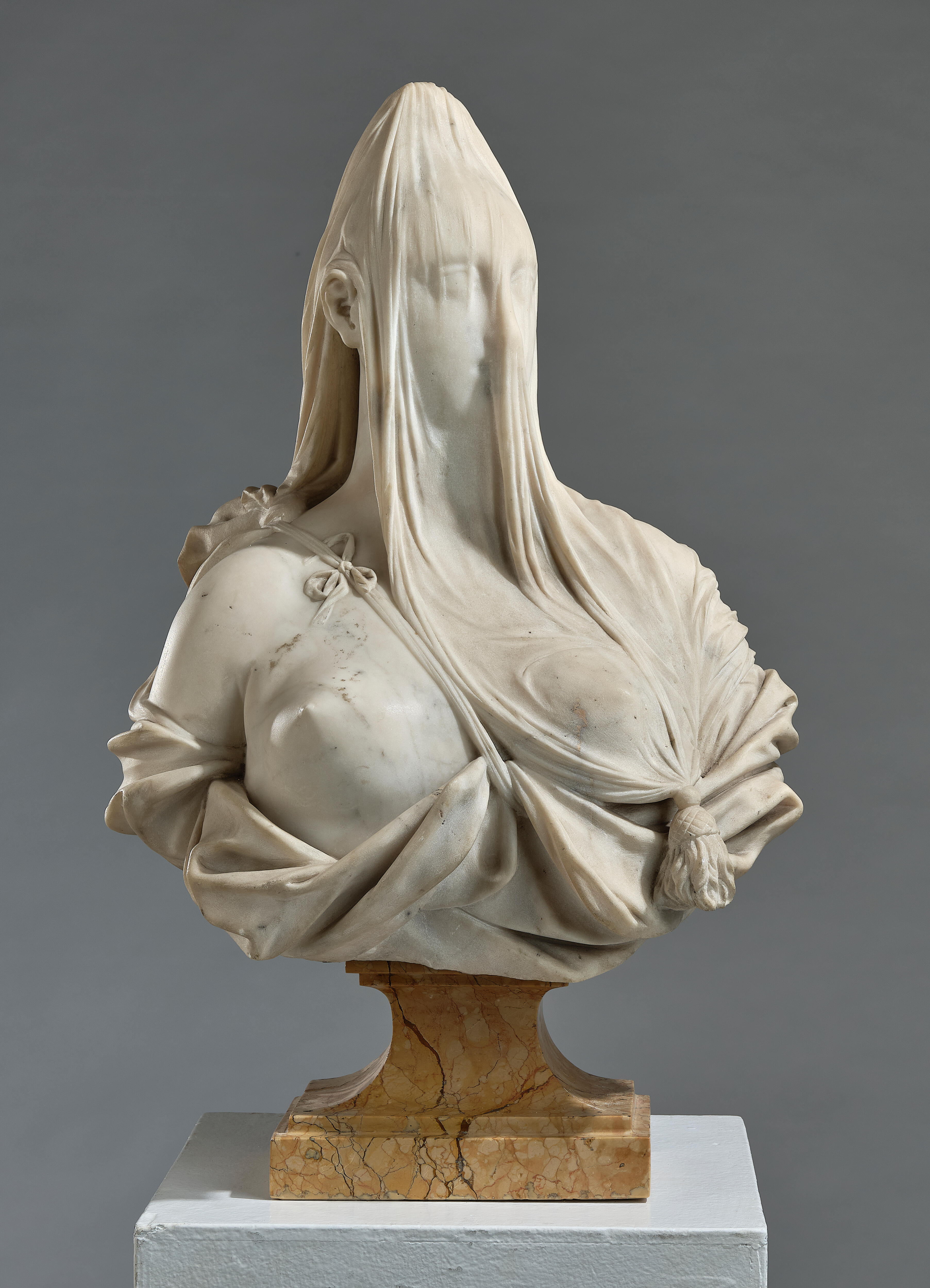
A marble bust offered with a €12,000-€16,000 estimate became the unexpected star of Dorotheum’s Vienna auction on 20 October, selling for €1.925 million including buyer’s fees and VAT. Catalogued as Donna velata, attributed to Antonio Corradini, it arrived in the sale with a modest valuation and emerged with a price belonging to a very different order of sculpture.
Updated
Behind the leap was a late development in the attribution. Dorotheum told the Austrian news agency APA that the connection to Corradini had been established shortly before the auction, following the identification of a corresponding plaster model during a restoration project at Ca’ Rezzonico in Venice. The auction house regarded that comparison as decisive. Its online catalogue, however, retains the more cautious “attributed to” wording.
That difference helps explain a result which, at first glance, looks almost incomprehensible against the estimate. According to the auction house’s account, the scholarly assessment had moved faster than the published valuation. Buyers were therefore considering a more ambitious proposition than the figures beside the lot might suggest.
The bust, offered as lot 980, is dated circa 1717-25. Carved in white marble, it stands 60cm high, rising to 75cm on its base. Dorotheum’s brief catalogue entry notes that the Venetian plaster had recently been restored through a Save Venice project and thanks the sculpture scholar Matej Klemenčič for his expertise. It supplies little of the extended argument one might expect to accompany a seven-figure work, leaving the relationship between model and marble as the central piece of evidence.
Veiled women were Corradini’s speciality, their appeal resting on one of sculpture’s most beguiling illusions: opaque stone made to suggest a transparent covering. The veil conceals the face while inviting scrutiny of the features beneath it, turning the sculptor’s technical skill into the subject of the work. Corradini also had a substantial connection with Vienna, where he spent about a decade and served Emperor Charles VI as court sculptor.
Dorotheum has hailed the sale as a world auction record for the artist. Its enthusiasm is understandable, although the €1.925 million is the buyer’s total rather than the hammer price, and should not be treated as a straight multiple of the pre-sale estimate.
The more interesting story lies in the passage from museum conservation to auction-room reassessment. A plaster preserved in Venice appears to have transformed the commercial prospects of a marble in Vienna. Publication of the comparison in greater detail would now be welcome. For the moment, the catalogue still records an attribution; the price records how much confidence the winning bidder was prepared to place in it.