Rembrandt’s lions lead an exhibition on art and exile at the Morgan
A new exhibition in New York brings together paintings, drawings and exceptional prints to examine the people and journeys that shaped Rembrandt’s world.
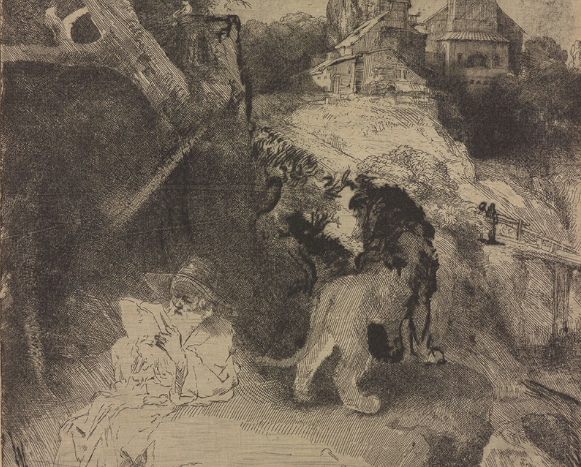
The Morgan Library & Museum will open Rembrandt’s Lions: Art and Exile in the Dutch Republic on 23 October, exploring the presence of migrants, refugees and displaced communities in the artist’s work. Organised by curator Sarah Mallory, the exhibition draws on the Morgan’s celebrated collection of Rembrandt etchings, supplemented by selected loans. It runs until 31 January 2027.
The title has both a literal and a symbolic meaning. Alongside Rembrandt’s studies of lions, the exhibition considers the animal’s role as an emblem of the Dutch Republic. Its broader subject is the formation of a society whose identity was still being negotiated during the artist’s lifetime. The Morgan notes that, at points in the seventeenth century, as many as 60 per cent of Amsterdam’s residents came from elsewhere.
Among the works highlighted in advance is the Rijksmuseum’s Recumbent Lion of 1660. Rembrandt’s concentrated observation of the animal provides an immediate visual attraction, but the exhibition extends into the human encounters and biblical narratives that occupied him throughout his career. Loans from the Rijksmuseum and other collections will accompany prints from what Apollo describes as the largest collection of Rembrandt’s etchings in North America.
A particularly telling inclusion is The Flight into Egypt: A Night Piece, of about 1651. Its subject brings displacement into the intimate setting of a family travelling through darkness. Seen alongside Rembrandt’s representations of people in contemporary Amsterdam, the print offers a connection between biblical history and experiences familiar within the city around him.
The exhibition also acknowledges the limits of the Republic’s reputation for tolerance. Religious and political refuge did not mean equal freedom for everyone, particularly in Dutch colonial territories. That qualification is essential to its account of the society in which Rembrandt worked.
For visitors, the opportunity to examine outstanding impressions of the etchings may prove as compelling as the historical argument. Their small scale rewards sustained attention: an adjustment of light, a barely articulated face or a figure emerging from darkness can carry an extraordinary emotional weight. The exhibition’s promise lies in bringing that close looking into conversation with the larger movements of people that shaped seventeenth-century Amsterdam.
Rembrandt’s Lions: Art and Exile in the Dutch Republic, Morgan Library & Museum, New York, 23 October 2026-31 January 2027.