A Caravaggio in Parma? The publicity leaves little room for doubt
An exhibition promises an “absolute masterpiece” by Caravaggio. Its press announcement tells a more qualified story.
Updated
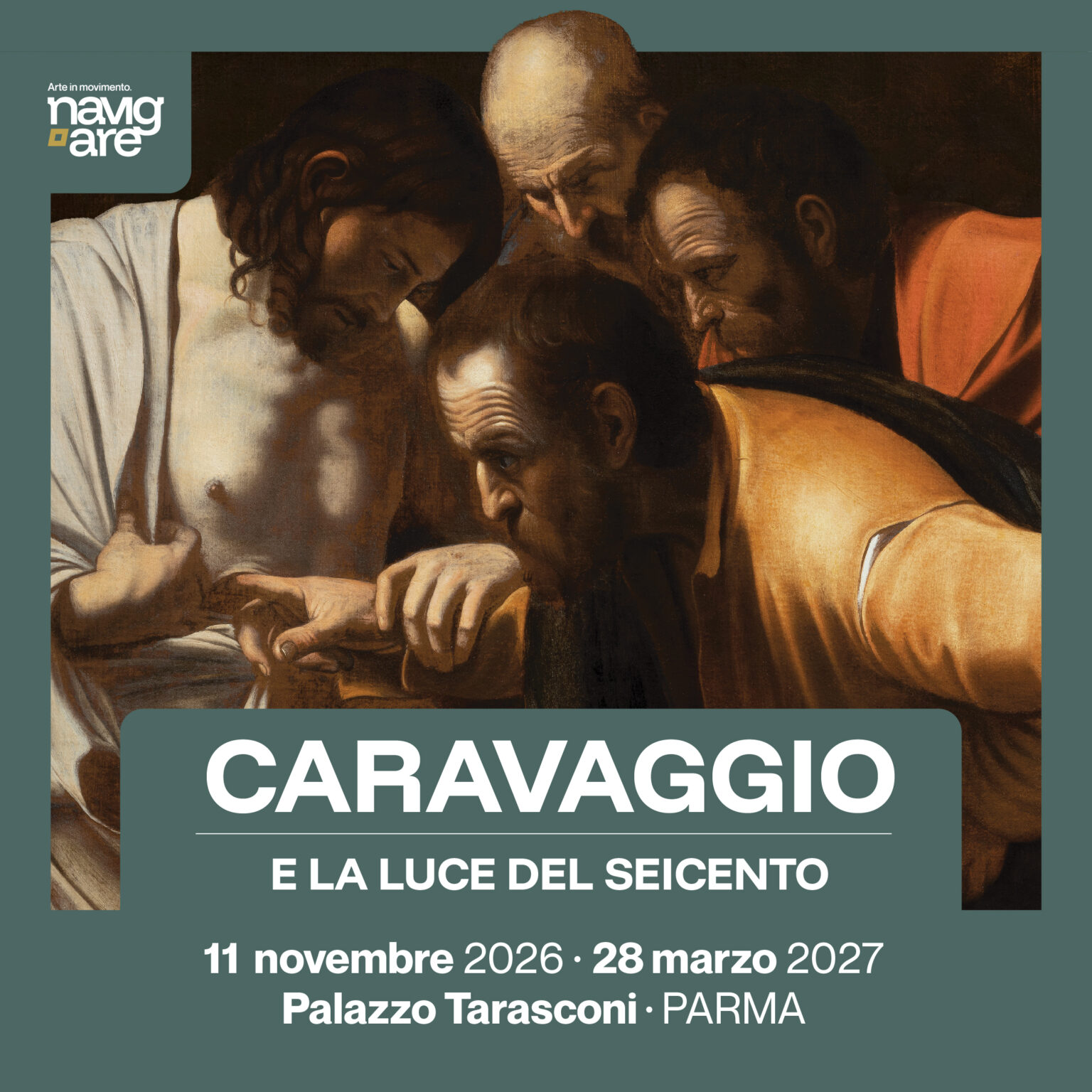
Visitors considering a trip to Parma this November could be forgiven for thinking that one of Caravaggio’s most celebrated paintings from Potsdam was coming to town. Palazzo Tarasconi’s website announces The Incredulity of Saint Thomas as a “capolavoro assoluto” by Michelangelo Merisi da Caravaggio, the crowning attraction of its forthcoming exhibition. There is nothing in that description to suggest an uncertain attribution, a separate version or the possible involvement of another painter.
Yet famously that c. 1601 masterpiece originally commissioned by Vincenzo Giustiniani now belongs to the Bildergalerie at Sanssouci in Potsdam. And it is not the painting on loan. The Parma announcement describes an exhibition drawn from private collections and calls its Saint Thomas, dated some six years later to the Giustiniani commission to around 1607, a work attributed to Caravaggio. They are proposing Caravaggio repeated the same composition in c.1601 and Orsi completed it six years later……really? Not likely. It is one of Caravaggio’s most copied works. Somewhere between the press information and the visitor-facing publicity, that qualification has disappeared….
Caravaggio e la luce del Seicento, curated by Alberto Bertuzzi, opens on 11 November and runs until 28 March 2027. Its 28 paintings explore Caravaggio’s influence through artists including Orazio Gentileschi, Battistello Caracciolo, Massimo Stanzione and Matthias Stomer. There is ample material here for an exhibition about the spread of his naturalism and dramatic lighting. But it is the promise of the master himself that gives the show its most obvious selling point.
The likely candidate is a Saint Thomas formerly in the Gracco Muratti collection in Trieste, subsequently described as belonging to an Austrian private collection in Florence. The Parma publicity does not identify its lender or provide a detailed catalogue entry, so that connection still requires confirmation. It is nevertheless a significant lead: a published account of Bertuzzi’s earlier Rome exhibition identifies the ex-Muratti picture as its concluding attraction and explains the proposed attribution.
That account advances a considerably more complicated history than the Parma website allows. Caravaggio is said to have begun another version for the Mattei family, leaving it unfinished when he fled Rome in 1606. Prospero Orsi - that famous hand that has never really been identified but could be the Master of Hartford - then supposedly completed it. The usual ‘Scientific examination’ is invoked to distinguish the principal passages attributed to Caravaggio from those assigned to Orsi. These are claims supporting an attribution, with substantial questions attached, rather than grounds for presenting an undisputed masterpiece.
The ex-Muratti canvas was also exhibited at Sant’Agnese in Agone in Rome earlier this year. Vatican News illustrated it as a work by Caravaggio and Prospero Orsi, dated 1602-1607. Even that presentation, accepting the proposed involvement of Caravaggio, acknowledged a second hand.
None of this establishes that the Parma organisers intend to deceive. It does show how easily exhibition publicity can turn a proposition into an apparent fact. “Attributed to” is a small phrase with a large responsibility: it tells the visitor that authorship remains a question. Remove it, add “absolute masterpiece”, and a very different picture emerges.
As we know Caravaggio is particularly susceptible to this treatment. His name can carry an exhibition almost unaided, while a familiar composition supplies instant recognition. A visitor who knows the Potsdam painting from books may recognise Saint Thomas without realising that the canvas before them has a separate history and a different standing. Publicity ought to explain that distinction before the ticket is bought.
There is every reason to exhibit disputed paintings. Seeing them alongside securely attributed works can sharpen judgement and bring scholarly arguments before a wider audience. But an exhibition should make the uncertainty intelligible. Until Parma publishes a full account of its picture and the evidence for its authorship, the most interesting question hanging over the show is how a probably copy, “attributed Caravaggio” became an “absolute masterpiece” on its way to the public.