Early Vanessa Bell of Virginia Woolf brings £57,600 at Christie’s
Offered without reserve, a small family scene drew attention to a scarce surviving work from Bell’s formative years.
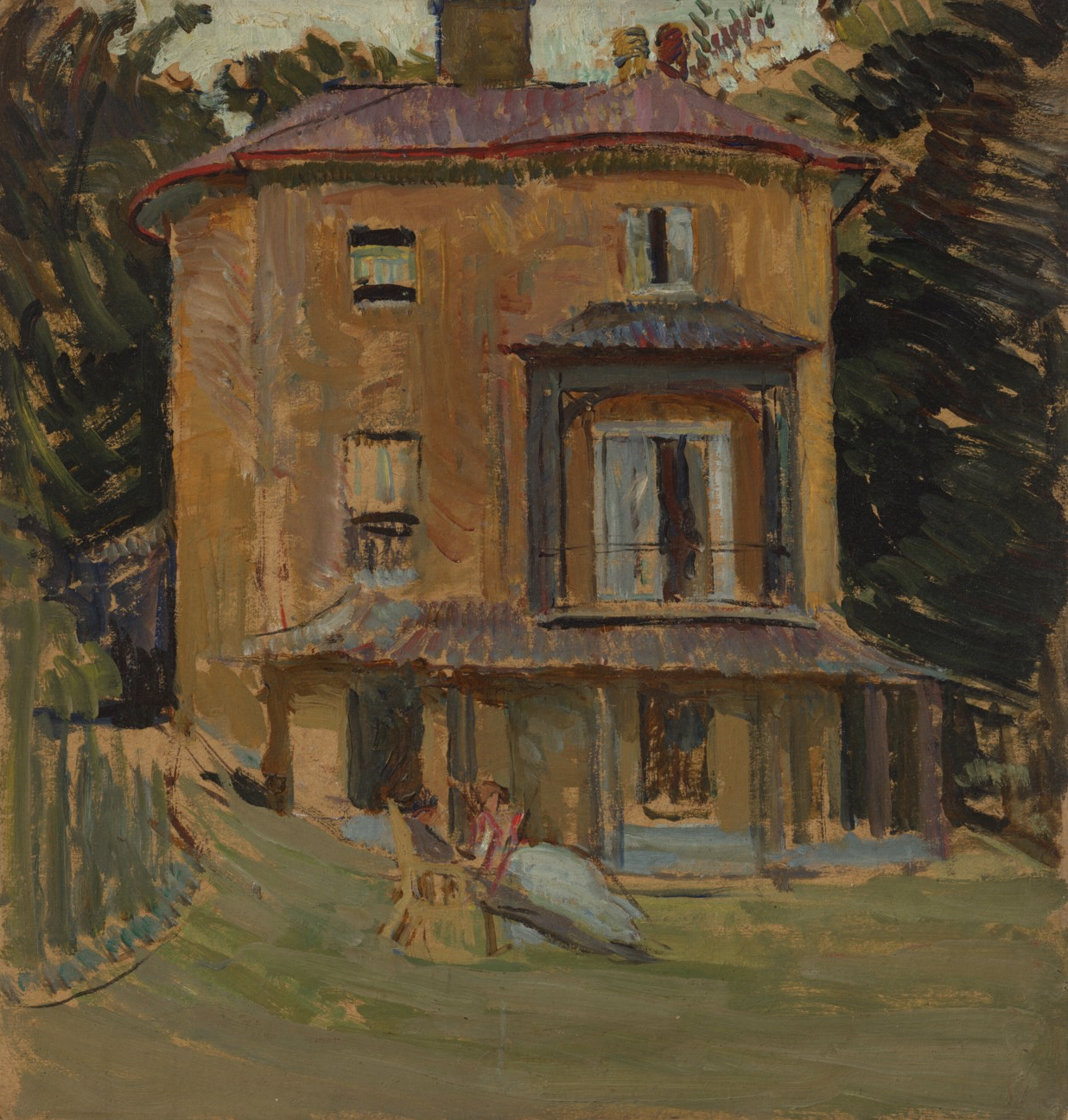
Virginia Woolf is easy to overlook in Vanessa Bell’s small painting of a house and garden. Seated beside her brother Adrian, she is absorbed in her reading, almost lost beneath the tall building behind them. It is an unassuming appearance for the future novelist, and an unusually early record of the family life that would furnish Bell with subjects throughout her career.
At Christie’s in London on 22 October, Adrian and Virginia Stephen on the Lawn, dated circa 1909, made £57,600 including fees. The £45,000 hammer was seven and a half times the upper end of its strangely low £4,000-£6,000 estimate. It had also been offered without reserve, leaving the seller without a minimum price below which the picture could not be sold.
Those modest terms are striking for a work with this history. Richard Shone, who wrote the catalogue entry, identifies it as Bell’s first image of Virginia and one of her few surviving paintings from before 1910. Much of that early work was destroyed in September 1940, when an incendiary bomb hit the London studios she shared with Duncan Grant. Pictures such as this offer glimpses of a beginning that can now be reconstructed only in fragments.
The picture was exhibited in Bell shows in London in 1973 and New York in 1980. Its history was well documented in the catalogue, although Christie’s gives no explanation for the low estimate or the decision to offer it without reserve.
Around 1909, Bell was on the threshold of the transformation associated with Roger Fry’s Manet and the Post-Impressionists exhibition of 1910. She had already visited Paris and admired the Impressionists, but Sargent and Whistler remained important influences. The bolder colour and simplified forms of her later work were still to come. Here, the ochre walls and dark foliage belong to a more restrained palette, enlivened by the violet roof and the red line of its guttering.
The house takes up most of the board which interestingly has a chess board marked out on the verso. Its windows and projecting bays give the composition an architectural weight, while the loosely painted garden and the two small figures keep the scene informal. Virginia’s face is barely indicated. Bell has caught the familiarity of people quietly occupying the same space, with no apparent need to arrange themselves for the painter.
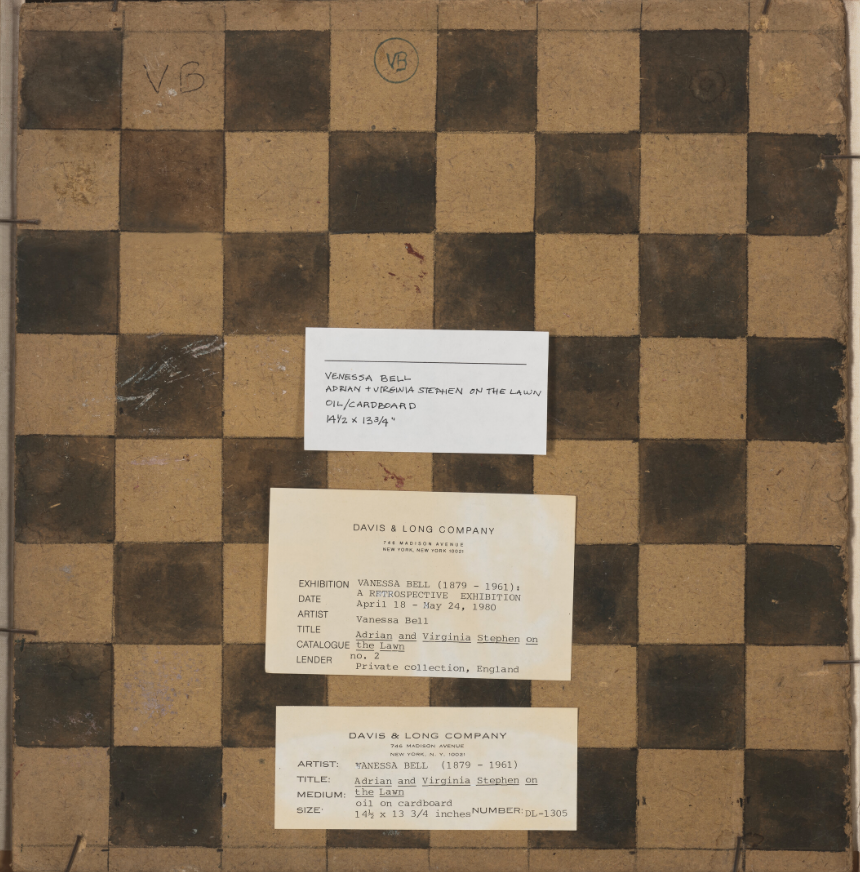
The setting, meanwhile, remains elusive. When the painting was shown in 1973, it was thought to depict a rented house at Playden, near Rye. Cornwall was subsequently suggested, though Shone notes that none of the known addresses fits. Talland House, the Stephens’ childhood holiday home in St Ives, is ruled out. The two figures have long since found their places in Bloomsbury history; the house that dominates their portrait is still waiting to be identified.