Whistler retrospective opens in the Netherlands
Amsterdam’s Van Gogh Museum presents the country’s first Whistler retrospective, accompanied by a more intimate examination of his Dutch connections in The Hague.
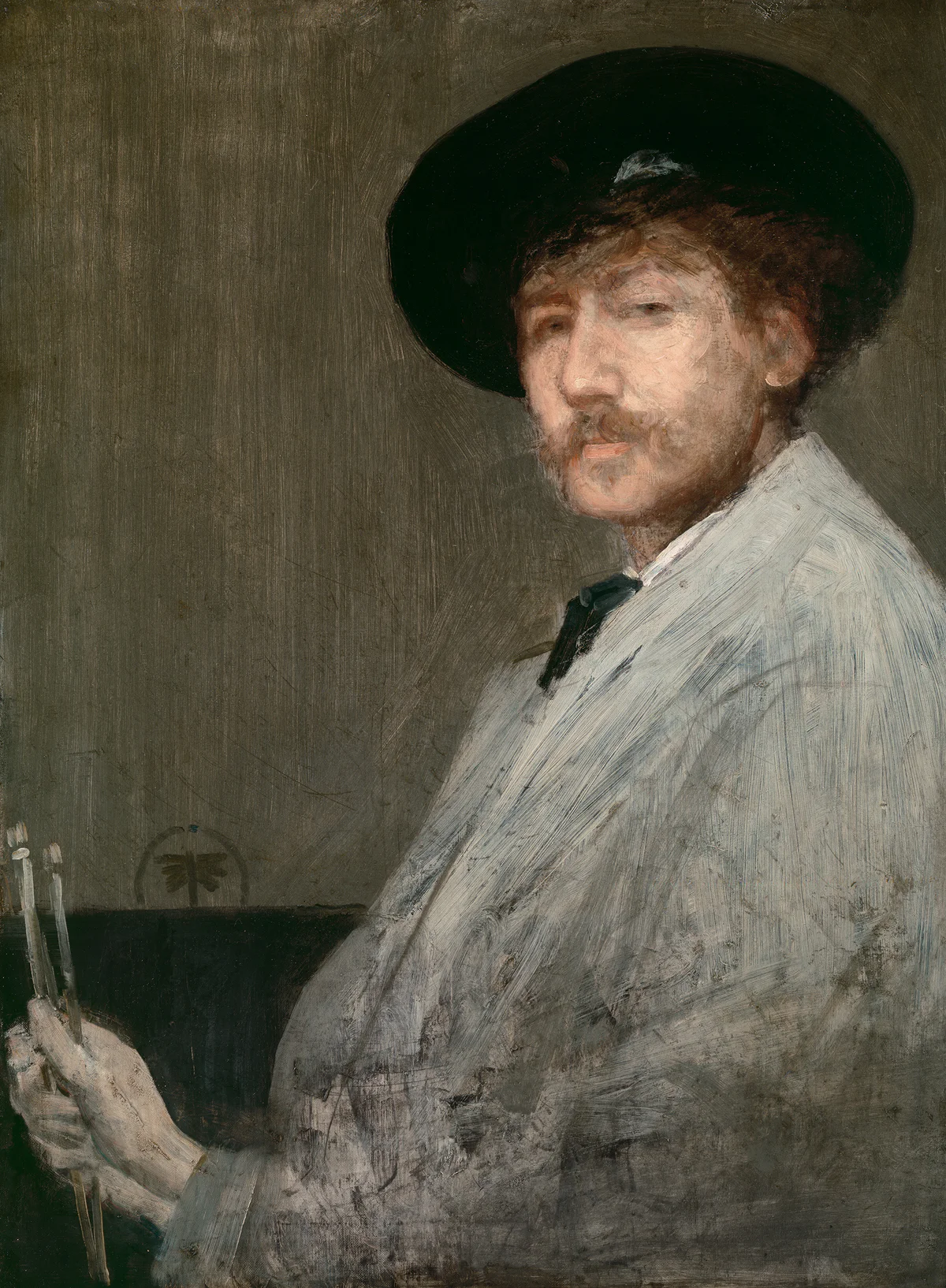
James McNeill Whistler’s restless movement between countries, artistic traditions and media is the subject of a major exhibition that opened at the Van Gogh Museum on 16 October. Whistler. Dandy and Disruptor follows the retrospective’s presentation at Tate Britain, bringing the American-born artist’s paintings and works on paper to Amsterdam until 10 January 2027. The organisers describe the project as the largest European survey of his work in thirty years.
The title foregrounds Whistler’s carefully cultivated public personality: the aesthete whose convictions repeatedly brought him into conflict with critics and patrons. Yet his enduring importance rests on something quieter. His paintings asked viewers to attend to relationships between colours and forms, and to the atmosphere these could create, rather than simply to the subject represented.
His musical titles were fundamental to that ambition. Arrangements, symphonies, harmonies and nocturnes proposed a way of understanding painting through its internal organisation. A portrait or riverside scene could possess the emotional force of music without depending on a narrative. The exhibition’s accompanying material explores this exchange between the arts, including Whistler’s interest in Chopin and the subsequent inspiration his nocturnes offered Debussy.
The Van Gogh Museum is a particularly appropriate setting. Van Gogh admired Whistler’s etchings and referred to his work in his letters. Both artists were fascinated by Japanese art, although they absorbed its lessons into markedly different pictorial languages. The comparison offers a useful reminder that the development of modern painting accommodated Whistler’s tonal restraint as well as Van Gogh’s more emphatic colour and brushwork.
A companion exhibition at the Mesdag Collection in The Hague, Whistler. Loving the Netherlands, gives the retrospective a more specific geographical focus. It examines the artist’s repeated Dutch visits through etchings, watercolours and small paintings, alongside works by Dutch contemporaries including Willem Witsen and George Hendrik Breitner.
Amsterdam’s canals and waterside buildings supplied Whistler with subjects he considered among his finest achievements in etching. His relationship with Hendrik Willem Mesdag also connects the exhibition directly to its setting: Whistler visited Mesdag’s museum on his final day in the Netherlands.
Together, the two exhibitions offer complementary approaches to an artist too easily reduced to a famous portrait or a celebrated quarrel. Amsterdam considers the breadth of his achievement; The Hague examines the sustained attention to particular places that helped make it possible.
Whistler. Dandy and Disruptor, Van Gogh Museum, Amsterdam, and Whistler. Loving the Netherlands, Mesdag Collection, The Hague, run from 16 October 2026 to 10 January 2027.